
Clay pit designs hold sacred meaning across indigenous cultures, serving as bridges between communities, ancestors, and the earth itself through timeless artistic traditions. 🌍

The Sacred Earth: Understanding Indigenous Clay Pits
For thousands of years, indigenous peoples worldwide have maintained profound relationships with clay pits, viewing these earthen sources not merely as material repositories but as living entities deserving respect and ceremony. These sites represent more than extraction points; they embody cultural memory, spiritual significance, and ancestral knowledge passed down through countless generations.
Clay pit designs in indigenous contexts encompass both the physical arrangement of extraction sites and the intricate patterns created in pottery and earthworks. Understanding these designs requires appreciating the holistic worldview that connects land, community, and creative expression in ways that modern societies are only beginning to recognize.
Ancient Wisdom: Clay Harvesting Traditions Across Continents
Indigenous communities have developed sophisticated methods for identifying, accessing, and utilizing clay deposits while maintaining ecological balance. These practices reflect deep geological knowledge acquired through observation and transmitted orally across generations.
North American Indigenous Clay Practices 🏺
Among Pueblo communities of the American Southwest, clay pits hold ceremonial importance. The Tewa people of New Mexico perform rituals before harvesting clay, offering prayers and cornmeal to honor the earth. Specific clay deposits belong to particular families or clans, with harvesting rights inherited matrilineally.
The physical design of these clay pits often follows natural contours, with minimal disruption to surrounding landscapes. Harvesting occurs seasonally, allowing sites to regenerate naturally. This sustainable approach ensures clay availability for future generations while maintaining the spiritual integrity of sacred sites.
African Clay Traditions and Communal Designs
Throughout Africa, clay pit designs reflect communal ownership and collective responsibility. In Nigeria, Yoruba potters maintain traditional clay sources through rotational harvesting systems that prevent depletion. The pits themselves become gathering places where knowledge transfer occurs alongside material extraction.
In Ghana, the Shai people designate specific clay pits for different purposes—some for cooking vessels, others for ceremonial objects, and still others for building materials. This categorization demonstrates sophisticated understanding of clay properties and their varied applications.
Architectural Patterns: Designing with Earth
Indigenous clay pit designs extend beyond extraction sites to encompass architectural applications that harmonize human habitation with natural landscapes. These earthen structures demonstrate engineering ingenuity developed without formal scientific training but through generations of observation and experimentation.
Australian Aboriginal Earth Structures
Aboriginal Australians have utilized clay in constructing temporary and permanent structures for over 60,000 years. Their earth ovens, known as “kap mauri,” feature carefully designed clay-lined pits that retain heat for extended cooking periods. The design maximizes thermal efficiency while minimizing fuel consumption.
These structures reflect intimate knowledge of local clay properties, including shrinkage rates, firing temperatures, and water retention characteristics. The circular or oval pit designs facilitate even heat distribution and prevent structural collapse during use.
Amazonian Terra Preta: Engineered Soil Systems
Indigenous Amazonian communities created “terra preta” (black earth) through intentional soil amendment practices that transformed nutrient-poor tropical soils into highly fertile agricultural lands. While not clay pits in the traditional sense, these engineered earth systems demonstrate sophisticated understanding of soil chemistry and long-term land management.
The designs incorporated charcoal, bone, and pottery fragments into clay-rich soils, creating anthropogenic earth that remains productive centuries later. This indigenous technology offers valuable insights for contemporary sustainable agriculture and carbon sequestration efforts.
Pottery Traditions: Clay Transformed Through Cultural Expression
The transformation of raw clay into functional and ceremonial objects represents one of humanity’s most enduring artistic traditions. Indigenous pottery designs encode cultural values, environmental knowledge, and spiritual beliefs within their forms and decorations. 🎨
Andean Ceramic Traditions
Pre-Columbian Andean civilizations developed distinctive pottery styles that reflected their mountainous environments and agricultural societies. Moche, Nazca, and Inca potters created vessels featuring geometric patterns, zoomorphic designs, and narrative scenes that documented daily life and cosmological beliefs.
The clay pit locations themselves influenced pottery characteristics. Coastal communities accessed different clay types than highland peoples, resulting in varied colors, textures, and firing properties. Potters traveled significant distances to obtain specific clays for particular purposes, demonstrating the valued relationship between location and material quality.
Pacific Island Clay Artistry
Throughout Oceania, indigenous potters developed unique techniques adapted to island environments with limited clay resources. Lapita pottery, among the oldest in the Pacific, features intricate dentate stamping that created complex geometric patterns. These designs served both decorative and identificatory functions, marking cultural affiliations and trade networks.
In Papua New Guinea, contemporary potters maintain ancient traditions while adapting to changing circumstances. Clay pits remain community resources, with harvesting accompanied by customary protocols that acknowledge ancestral connections to land.
Spiritual Dimensions: Clay as Sacred Medium
For indigenous cultures worldwide, clay transcends mere material utility to embody spiritual significance. The earth from which clay emerges represents the source of life itself, and working with clay constitutes a sacred act connecting practitioners to creation forces.
Ceremonial Clay Objects and Ritual Significance
Many indigenous communities create specialized clay objects exclusively for ceremonial purposes. These items often originate from particular clay pits designated as sacred sites. The Hopi people of Arizona, for example, use clay from specific locations to create prayer sticks and ritual offerings that cannot be made from clay sourced elsewhere.
The designs of these ceremonial objects follow strict traditional guidelines, with specific patterns, colors, and forms required for different ritual contexts. Deviation from established designs may render objects spiritually ineffective, emphasizing the importance of precise knowledge transmission across generations.
Creation Stories and Clay Origins
Numerous indigenous creation narratives feature clay as the substance from which humanity emerged. These stories reflect the deep connection between people and earth, positioning humans as literally made from the same material they use for creative and utilitarian purposes.
In Cherokee tradition, the first man and woman were formed from clay by the Creator. This origin story informs contemporary Cherokee pottery practices, where working with clay reconnects practitioners with creation events and ancestral origins.
Environmental Knowledge Embedded in Clay Practices
Indigenous clay pit designs and utilization methods demonstrate sophisticated environmental science developed through millennia of careful observation. These practices offer valuable lessons for contemporary resource management and sustainable development. 🌱
Sustainable Extraction Methods
Traditional clay harvesting typically operates on principles of reciprocity and regeneration. Indigenous practitioners remove only what they need, often conducting harvesting ceremonies that acknowledge taking from the earth and expressing gratitude for materials received.
Physical pit designs facilitate natural regeneration. Shallow, dispersed extraction prevents complete depletion of deposits. Many communities rotate between multiple clay sources, allowing previously harvested sites to recover before returning. This rotational system maintains clay quality while preserving ecological relationships within extraction areas.
Seasonal Timing and Geological Understanding
Indigenous clay harvesters possess detailed knowledge of seasonal variations affecting clay properties. Wet and dry seasons alter clay workability, requiring timing adjustments for optimal extraction. Some communities harvest clay only during specific lunar phases, believing moon cycles influence material qualities.
This knowledge, while sometimes expressed through spiritual frameworks, reflects genuine understanding of hydrological cycles, weathering processes, and clay mineralogy. Modern geological science increasingly validates traditional indigenous knowledge about earth materials and processes.
Contemporary Challenges and Cultural Preservation
Indigenous clay traditions face significant pressures from modernization, land dispossession, and cultural disruption. Many traditional clay pit sites have been lost to development, mining, or restricted access due to changing land ownership patterns.
Revitalization Efforts and Knowledge Recovery
Across indigenous communities, deliberate efforts are underway to preserve and revitalize traditional clay practices. These initiatives recognize that losing access to ancestral clay pits means losing more than material resources—entire knowledge systems, cultural identities, and spiritual connections face erasure.
In New Zealand, Māori potters work to rediscover traditional clay sources and techniques that were suppressed during colonization. Workshops bring together elders and young people, facilitating knowledge transmission that had been interrupted for generations. Similar revitalization programs operate in Native American, Aboriginal Australian, and indigenous South American communities.
Legal Protections and Land Rights
Protecting traditional clay pit sites requires addressing broader land rights issues. Indigenous communities increasingly advocate for legal recognition of customary resource rights, including access to traditional clay sources. Some jurisdictions now recognize indigenous resource rights within environmental and cultural heritage frameworks.
These legal protections acknowledge that indigenous clay pits possess values beyond commercial resource extraction, recognizing their cultural, spiritual, and educational significance for indigenous peoples and humanity broadly.
Lessons for Modern Sustainable Practices
Indigenous clay pit designs and management practices offer valuable models for contemporary sustainability efforts. The principles underlying traditional practices—reciprocity, regeneration, seasonal awareness, and long-term thinking—address deficiencies in modern resource extraction approaches. ♻️
Biomimicry and Traditional Ecological Knowledge
Contemporary designers and environmental scientists increasingly turn to indigenous knowledge systems for sustainable solutions. Traditional clay practices demonstrate how human communities can maintain productive relationships with earth resources across centuries without depletion or degradation.
The concept of “seventh generation thinking,” prominent in many indigenous cultures, requires considering the impacts of current actions on descendants seven generations hence. Applying this principle to resource management would fundamentally transform contemporary extraction industries.
Community-Based Resource Management Models
Indigenous clay pit management typically operates through communal governance rather than individual ownership. These collective management systems prioritize long-term community welfare over short-term individual gain, offering alternatives to privatized resource exploitation models.
Contemporary common-pool resource management theory, recognized with Nobel prizes in economics, validates the effectiveness of indigenous communal governance systems. These findings support indigenous communities advocating for resource management authority over traditional territories.
Preserving Heritage While Embracing Innovation
Indigenous clay traditions continue evolving as communities balance cultural preservation with contemporary circumstances. Many indigenous potters maintain traditional designs while experimenting with new forms, markets, and technologies that support cultural continuity without requiring cultural stasis.
Cultural Authenticity and Market Pressures
Indigenous potters navigate complex tensions between maintaining authentic traditional practices and adapting to market demands. Tourism and art markets create economic opportunities but can also pressure artists toward commercialization that compromises cultural integrity.
Some communities address these tensions by clearly distinguishing ceremonial objects from commercial pottery, maintaining sacred traditions while developing sustainable livelihoods through earth arts. This approach preserves spiritual and cultural significance while enabling economic participation on indigenous terms.
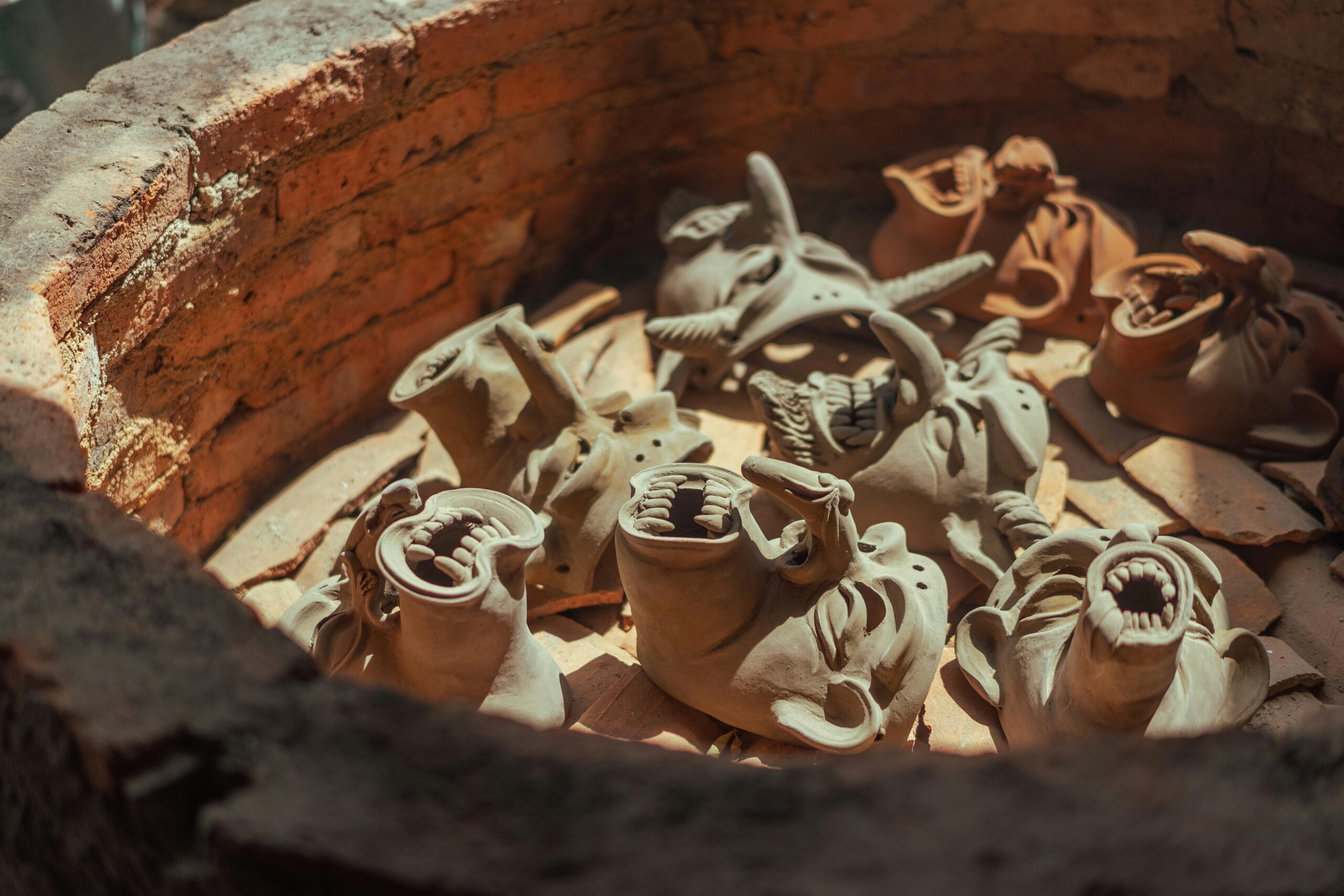
Future Horizons: Clay Traditions in the 21st Century
As humanity confronts environmental crises and cultural homogenization, indigenous clay traditions offer both practical solutions and philosophical guidance. These ancient practices demonstrate sustainable relationships between humans and earth systems while affirming the enduring value of cultural diversity.
The continued vitality of indigenous clay traditions depends on protecting access to traditional clay pits, supporting knowledge transmission between generations, and recognizing indigenous peoples’ rights to maintain cultural practices connected to ancestral lands. These efforts benefit not only indigenous communities but humanity broadly by preserving diverse approaches to sustainable living and creative expression.
Digital documentation projects now record traditional clay knowledge, creating resources for education and revitalization while raising concerns about intellectual property and appropriate knowledge sharing. Indigenous communities navigate these challenges while working to ensure their clay traditions continue enriching future generations.
Ultimately, the enduring significance of indigenous clay pit designs lies not merely in their archaeological or aesthetic interest but in their demonstration that human creativity and material culture can flourish sustainably when grounded in respect for earth systems, community welfare, and long-term thinking. These traditions remind us that the oldest human technologies often embody the wisest approaches to living well on our shared planet. 🌏